
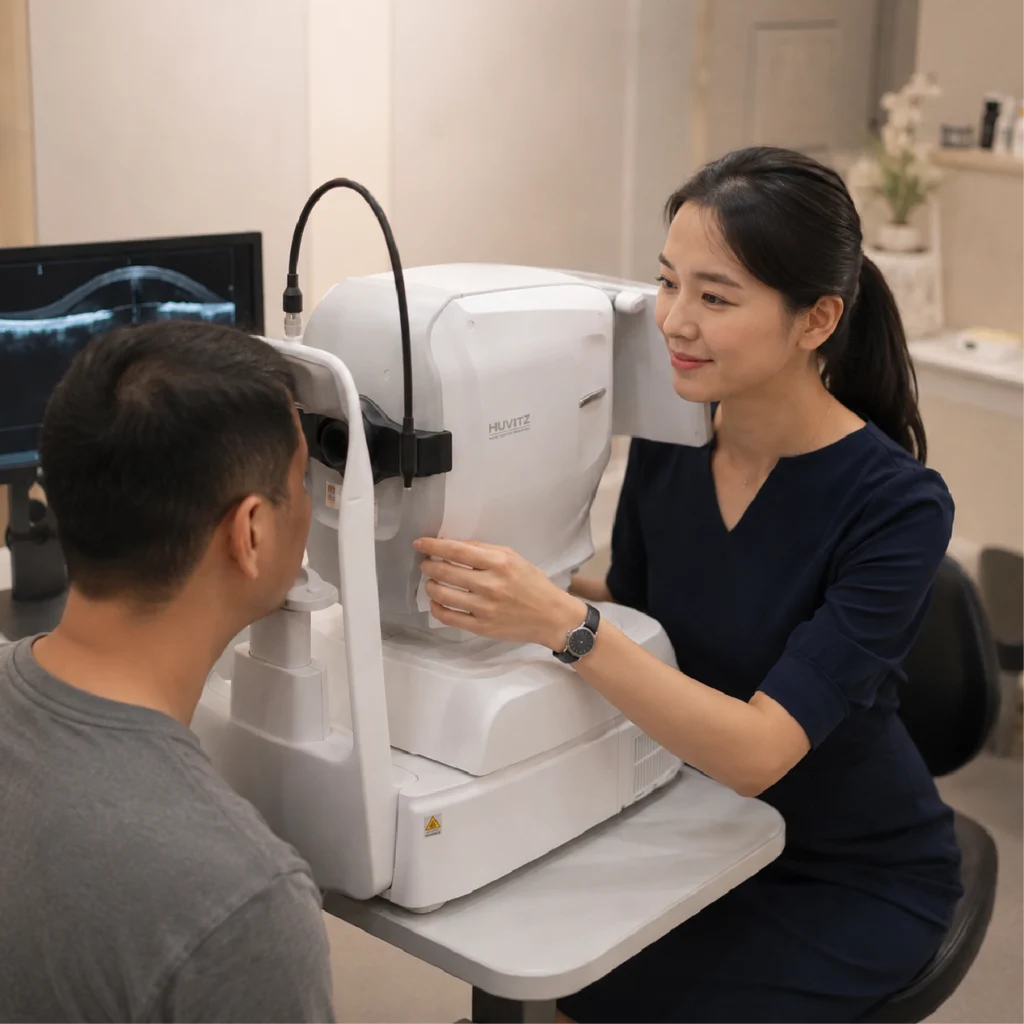

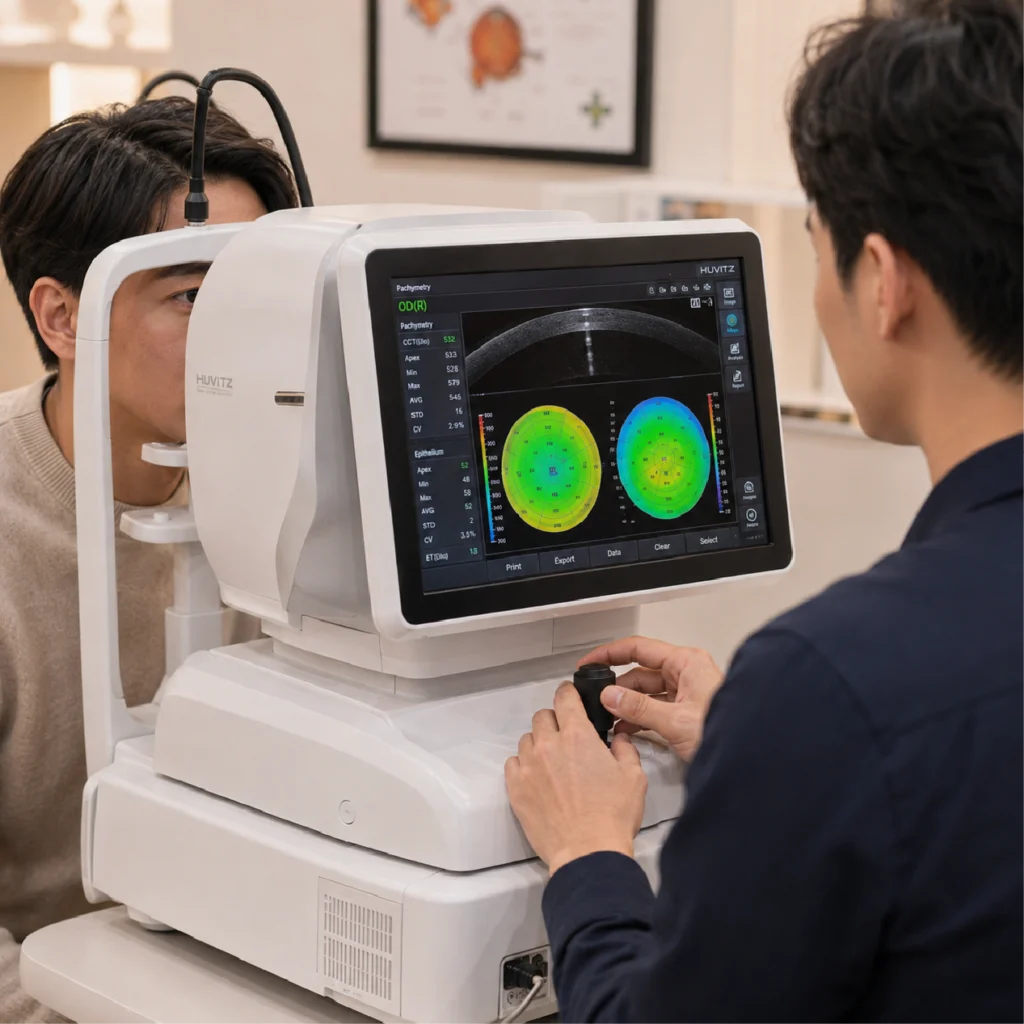

Optical Coherence Tomography (OCT) is an advanced, non-invasive imaging technology that provides high-resolution, cross-sectional scans of the retina and optic nerve. Much like an ultrasound uses sound waves, OCT uses light waves to capture detailed images of the eye’s internal layers, offering unprecedented precision in diagnosing and monitoring eye conditions.
Identify eye conditions in early stages to protect sight.
Quick, painless scans with no discomfort.
Tracks subtle changes, especially important for high-risk patients like those with diabetes, glaucoma, or family history.
OCT is recommended for people with diabetes, glaucoma, macular degeneration, a family history of eye disease, or unexplained vision changes. Even without symptoms, it can detect hidden issues not visible in a standard eye exam, making it valuable for anyone seeking a complete view of their eye health.
Many retinal and optic nerve diseases develop silently, showing no symptoms in the early stages. OCT imaging allows optometrists to see microscopic details beneath the surface of the retina, detecting changes long before they affect vision. It is invaluable in diagnosing and monitoring:

OCT provides detailed images of the optic nerve and nerve fiber layers, allowing early detection of damage and accurate monitoring of disease progression, which is critical since vision loss from glaucoma is irreversible.

By capturing fine details of the macula, OCT can reveal early signs of degeneration, swelling, or abnormal blood vessels. This enables timely management to slow the disease and preserve central vision.

OCT detects subtle changes such as retinal swelling, bleeding, or fluid leakage caused by damaged blood vessels from diabetes. Early detection helps prevent serious complications that can lead to vision loss.

From small retinal tears to more severe detachments, OCT helps identify abnormalities in retinal layers quickly and accurately. This ensures timely referral and treatment before permanent vision damage occurs.


Glaucoma

Macular Degeneration (AMD)

Diabetic Retinopathy

Retinal Diseases
Many retinal and optic nerve diseases develop silently, showing no symptoms in the early stages. OCT imaging allows optometrists to see microscopic details beneath the surface of the retina, detecting changes long before they affect vision. It is invaluable in diagnosing and monitoring:
Glaucoma
OCT provides detailed images of the optic nerve and nerve fiber layers, allowing early detection of damage and accurate monitoring of disease progression, which is critical since vision loss from glaucoma is irreversible.
Macular Degeneration (AMD)
By capturing fine details of the macula, OCT can reveal early signs of degeneration, swelling, or abnormal blood vessels. This enables timely management to slow the disease and preserve central vision.
Diabetic Retinopathy
OCT detects subtle changes such as retinal swelling, bleeding, or fluid leakage caused by damaged blood vessels from diabetes. Early detection helps prevent serious complications that can lead to vision loss.
Retinal Diseases
From small retinal tears to more severe detachments, OCT helps identify abnormalities in retinal layers quickly and accurately. This ensures timely referral and treatment before permanent vision damage occurs.
OCT Imaging goes beyond a standard eye exam by providing detailed images of the retina and optic nerve, making it vital for detecting sight-threatening conditions early. Protect your vision today by booking your OCT scan and see the difference early detection can make!
Lorem ipsum dolor sit amet, consectetuer adipiscing elit, sed diam nonummy nibh euismod tincidunt ut laoreet dolore magna aliquam erat volutpat. Ut wisi enim ad minim veniam, quis nostrud exerci tation ullamcorper suscipit lobortis nisl ut aliquip ex ea commodo consequat. Duis autem vel eum iriure dolor in hendrerit in vulputate velit esse molestie consequat, vel illum dolore eu feugiat nulla facilisis at vero eros et accumsan et iusto odio dignissim qui blandit praesent luptatum zzril delenit augue duis dolore te feugait.Lorem ipsum dolor sit amet, cons ectetuer