






Myopia Control Lenses

Take Control of Myopia Early

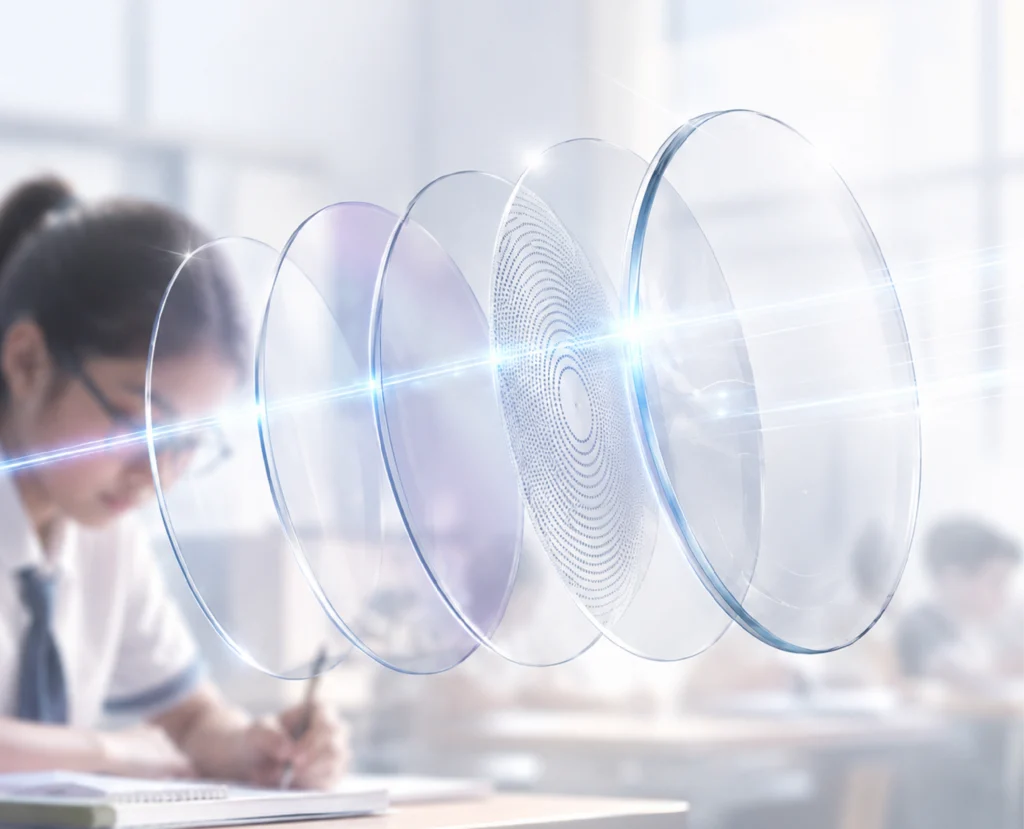
Myopia, or short-sightedness, is becoming increasingly common among children worldwide, often starting at a young age and worsening over time. Myopia control lenses are specially designed to slow down this progression, helping protect your child’s vision and reduce the risks of serious eye conditions later in life.

Protecting Young Eyes Beyond Just Normal Glasses

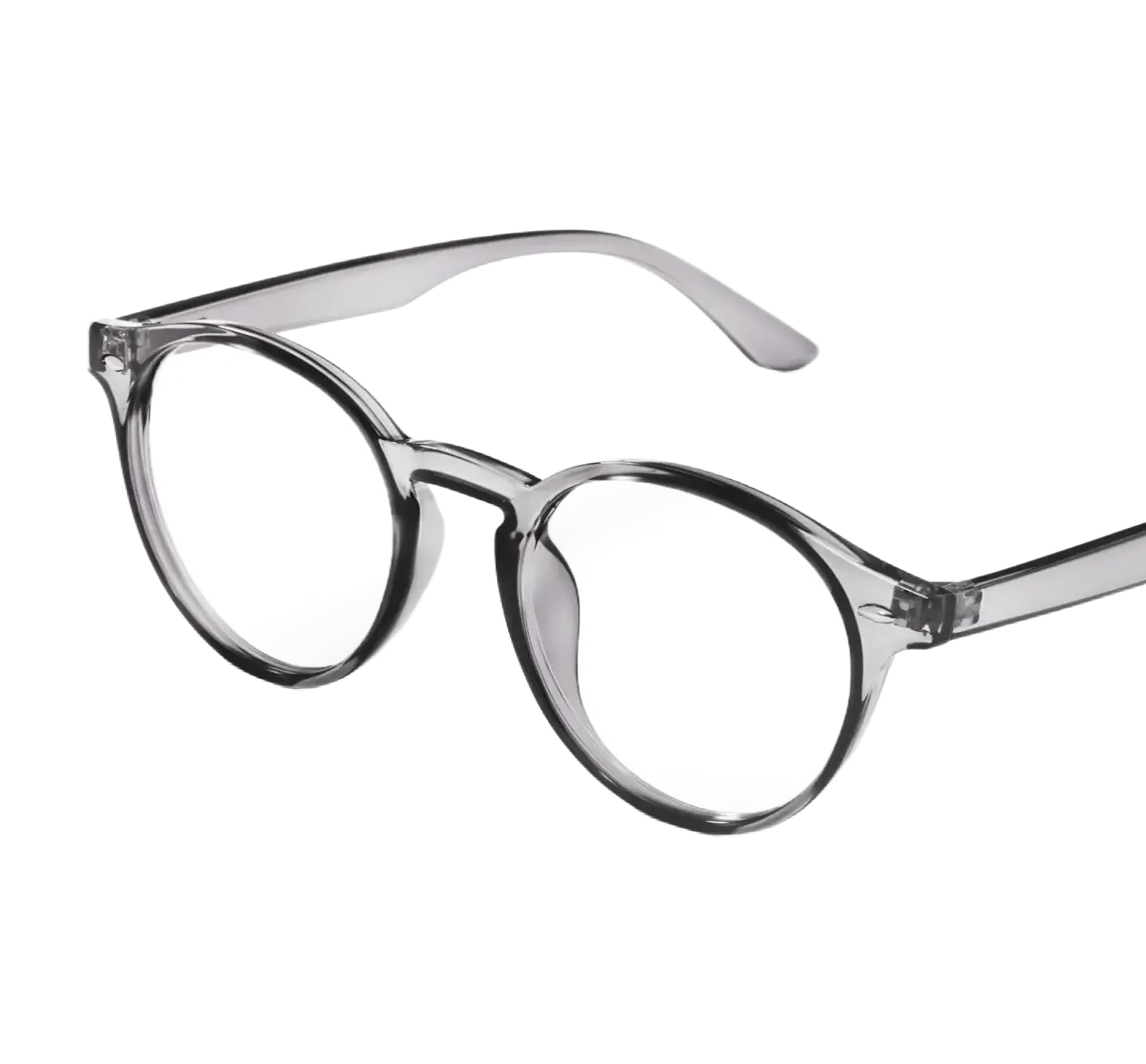
Unlike regular glasses that simply correct blurry vision, myopia control lenses use specially designed optics to manage how light focuses on the eye. They are designed to help slow myopia progression in children while maintaining clear, comfortable vision for everyday activities.

By slowing the progression of myopia, these lenses may also help reduce the long-term eye health risks associated with high myopia. With different lens designs available, the most suitable option can be selected based on your child’s vision needs, lifestyle, and comfort.

Why These Designs Matter

Because myopia (especially in children) is linked with elongation of the eyeball, which causes long-term risks (retinal detachment, glaucoma, etc.), slowing that elongation is a clinical goal. These designs, when properly fitted and worn regularly, have shown meaningful slowing of myopia progression (both in prescription and axial length) in studies. 

Myopic Defocus

Myopic Defocus

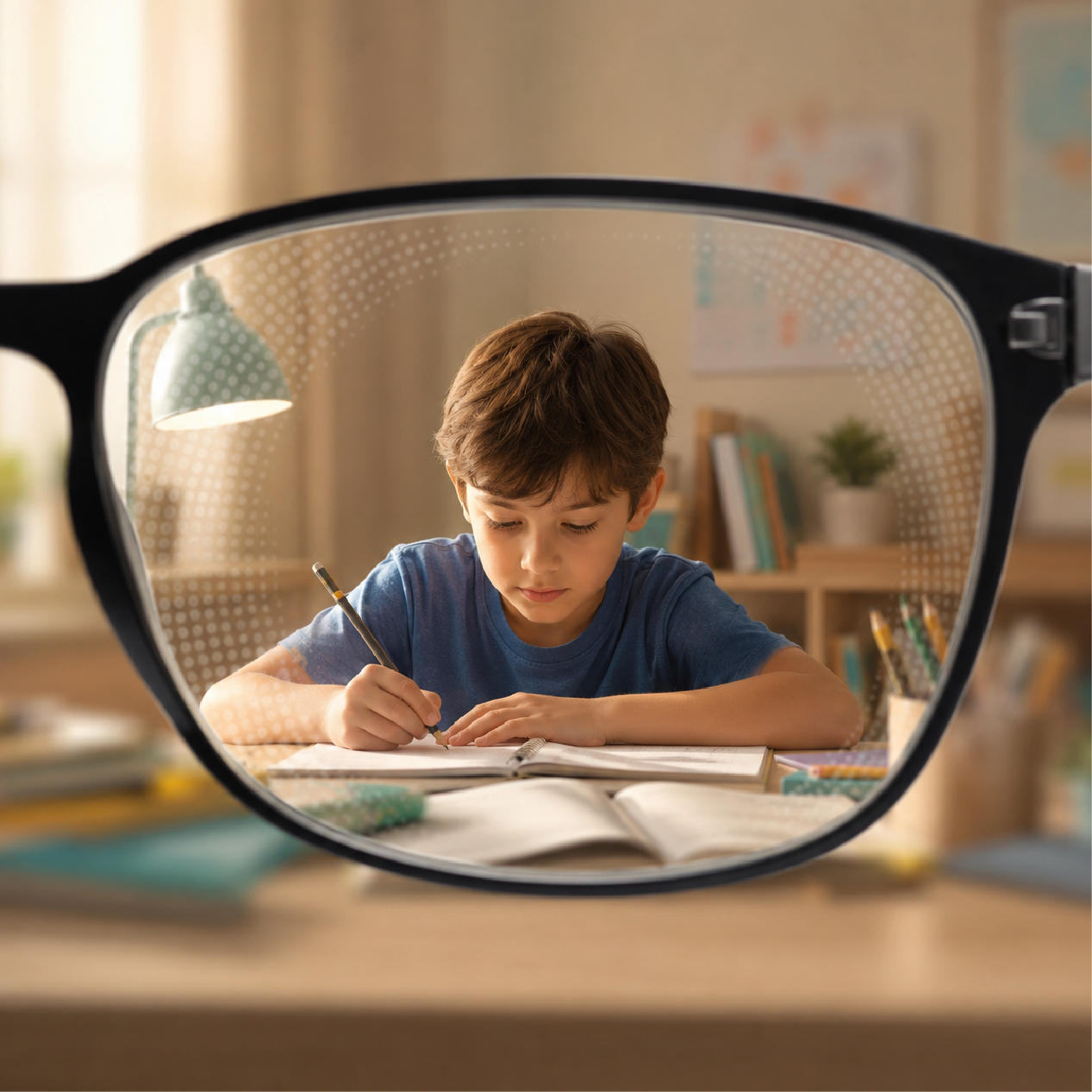
These lenses combine a clear central vision zone with specially designed treatment zones surrounding it. The treatment zones use small segments, highly aspherical lenslets, or annular optical elements to create controlled myopic defocus in front of the retina, while the child's prescription continues to provide clear vision. This simultaneous combination of clear vision and myopic defocus is designed to provide an optical signal that helps slow excessive axial elongation and myopia progression.
Peripheral Defocus

Peripheral Defocus

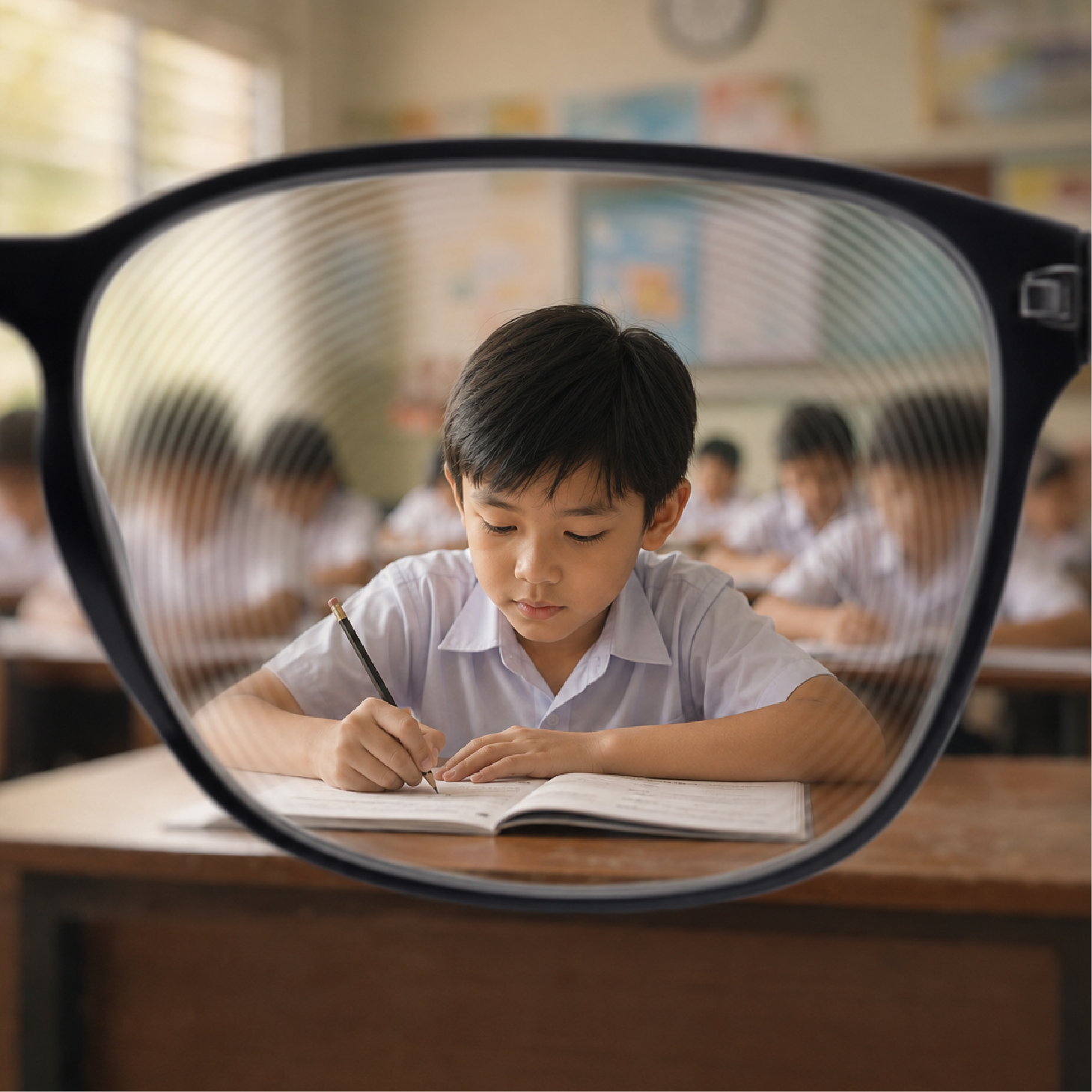
These lenses provide clear central vision while gradually modifying the optical power toward the peripheral areas of the lens. The peripheral zones are designed to shift peripheral light forward, helping reduce unwanted hyperopic defocus behind the peripheral retina. By creating a more favourable peripheral focus while maintaining a clear central prescription, the design aims to reduce visual signals associated with excessive eye elongation.
Progressive Addition (PAL)

Progressive Addition (PAL)

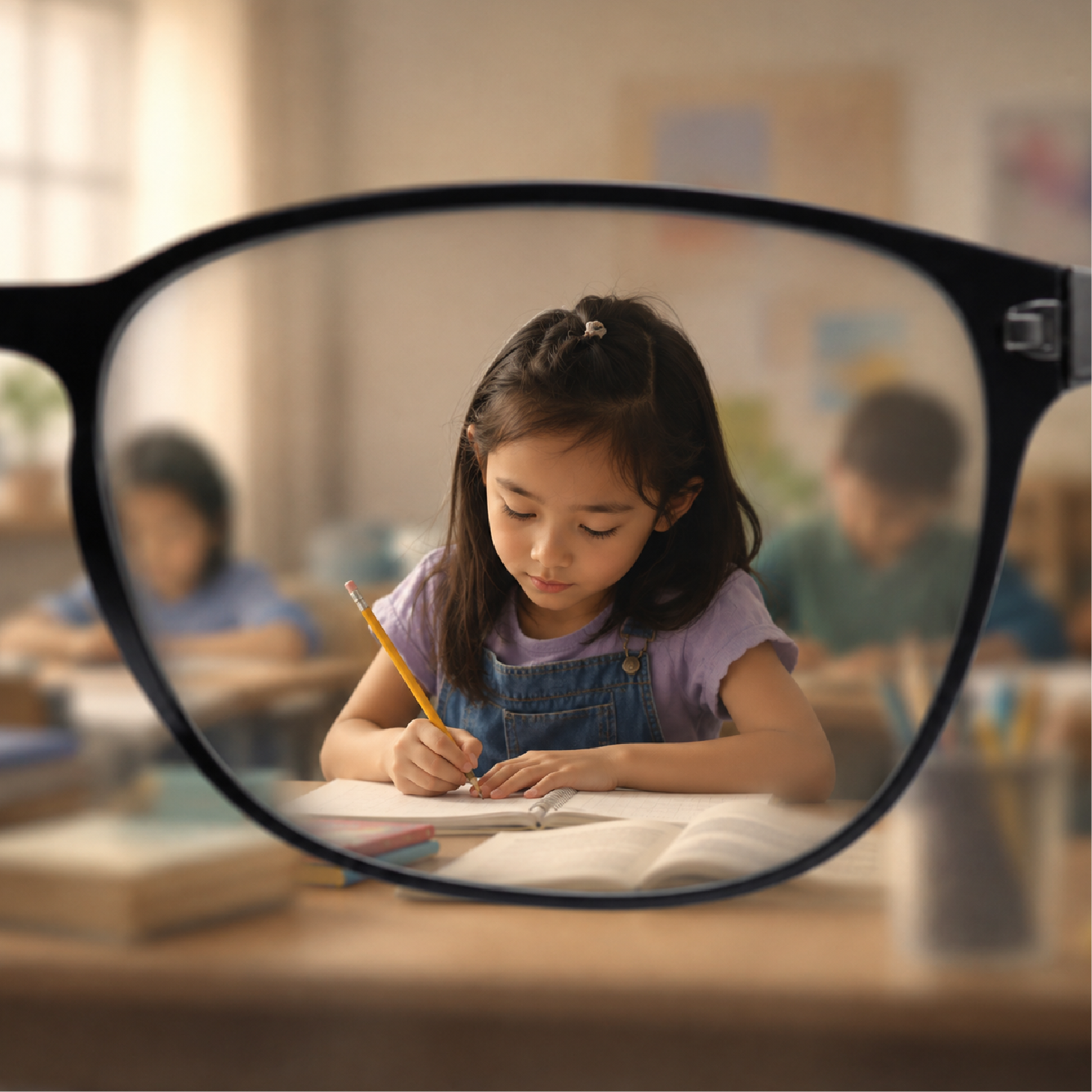
Progressive Addition Lenses, or PALs, gradually increase plus power from the distance zone at the top of the lens toward the near zone below. The additional near power reduces the amount of focusing effort, or accommodation, required during reading and other close-up activities. This may help reduce accommodative lag and near-related hyperopic defocus, factors that have been investigated in relation to myopia progression.

Myopic Defocus
Myopic Defocus

Peripheral Defocus

Peripheral Defocus

Progressive Addition (PAL)
Progressive Addition (PAL)

Simultaneous Myopic Defocus Lenslets

Simultaneous Myopic Defocus Lenslets

These lenses embed small “lenslets” or micro-cylindrical / annular “treatment zones” around a clear central zone. These zones focus some light in front of the retina (myopic defocus) while maintaining clear central distance vision. The idea: by having that myopic defocus in peripheral vision, the eye receives signals to slow its growth (axial elongation).

Examples:

  • Hoya MiYOSMART, using Defocus Incorporated Multiple Segments (DIMS) technology. It has a central clear zone plus many lenslets arranged in a honeycomb array.
  • Essilor Stellest, using Highly Aspherical Lenslet Target (HALT) technology, which incorporates rings of lenslets around a central clear zone. 
  • ZEISS MyoCare, which uses a design called Cylindrical Annular Refractive Elements (C.A.R.E.) and also has variants (e.g. MyoCare S) tailored for different ages / rates of progression.
Peripheral Aspheric / Diffusion Designs

Peripheral Aspheric / Diffusion Designs

Rather than distinct lenslets (mini lenses), these designs alter the periphery of the lens in other ways:

  • Peripheral aspheric zones where the power gradually changes outward from the center, inducing defocus in the retina’s periphery. Example: Zeiss MyoVision Pro.
  • Diffusion Optics Technology (DOT) — a design that uses tiny diffusing microstructures (dots or small diffusers) around a central clear zone to blur or diffuse light in the periphery, again to create myopic defocus while preserving central vision.
Trade-offs & Adaptation Zones

Trade-offs & Adaptation Zones

Each lens design makes trade-offs among comfort, clarity, and the amount / strength of defocus. Key design parameters include:

  • Central clear zone size: how big the area in the lens without lenslets or diffusers is (where distant vision is unaltered). Smaller clear zones tend to push more defocus onto the peripheral retina, but they may increase adaptation time or cause visual artifacts.
  • “Add” or defocus power: how much additional (+) power or defocus is introduced in the treatment zones; higher adds may slow progression more but might come with more impact on overall lens clarity or adaptation comfort.
  • Fill factor: the proportion of the lens surface taken up by the treatment zones vs. clear distance zones. A larger treatment area can provide more defocus signals, but it may affect clarity or contrast.
  • Adaptation and vision trade-offs: Some peripheral blur or small distortions may occur. Manufacturers try to minimize these through smart spacing, optical design, or “graduated” or “aspheric” transitions.
Simultaneous Myopic Defocus Lenslets

Simultaneous Myopic Defocus Lenslets

Peripheral Aspheric / Diffusion Designs

Peripheral Aspheric / Diffusion Designs

Trade-offs & Adaptation Zones
Trade-offs & Adaptation Zones

Protect Their Vision for the Future

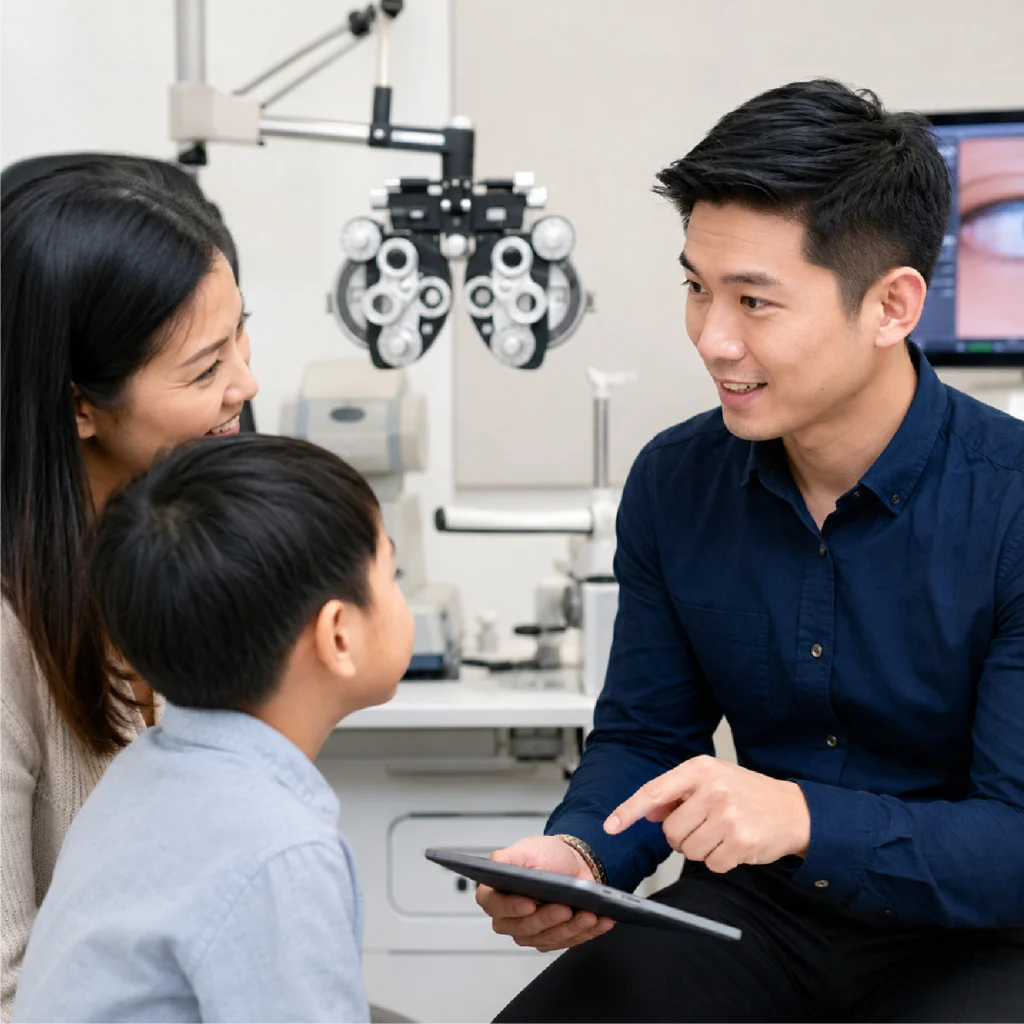
Myopia control lenses are recommended for children whose myopia is progressing year after year, especially if there is a family history of high myopia. They are ideal for young wearers who spend long hours on near tasks like reading, homework, or screen use.

At Eye & Glasses, our optometrists provide a full myopia assessment and will recommend the most suitable control lens based on your child’s eye health, lifestyle, and needs. Early intervention makes all the difference. Book a consultation today and take the first step toward safeguarding your child’s vision for life.