


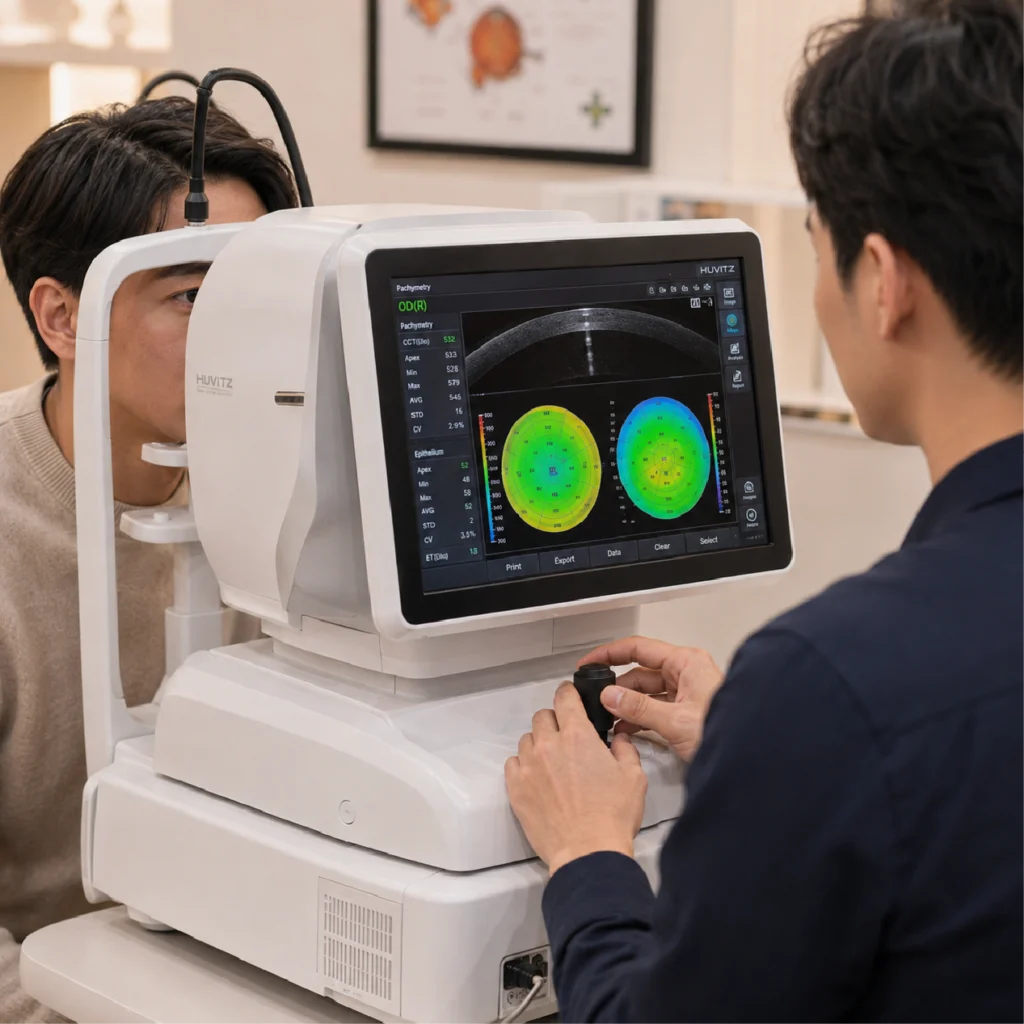

Optical Coherence Tomography, or OCT, is an advanced, non-invasive imaging scan that allows us to see beneath the surface of the eye. It captures detailed cross-sectional images of the retina and optic nerve, helping our optometrists assess the eye’s internal layers with greater precision. This provides valuable insight for detecting and monitoring eye conditions that may not be visible during a standard eye check.
OCT imaging supports earlier detection and more accurate monitoring of eye health changes over time. The scan is quick, comfortable, and suitable for routine eye health assessments, especially for individuals with higher risk factors such as diabetes, glaucoma, retinal concerns, or a family history of eye disease. With clearer insight beneath the surface, we can guide timely care to better protect long-term vision.
OCT imaging is especially useful for people with diabetes, glaucoma, macular degeneration, retinal concerns, a family history of eye disease, or unexplained vision changes. Even when your vision feels normal, OCT can help detect subtle changes beneath the surface that may not be visible during a standard eye examination, giving a more complete picture of your eye health.
Many retinal and optic nerve diseases develop silently, showing no symptoms in the early stages. OCT imaging allows optometrists to see microscopic details beneath the surface of the retina, detecting changes long before they affect vision. It is invaluable in diagnosing and monitoring:
Glaucoma
OCT provides detailed images of the optic nerve and nerve fiber layers, allowing early detection of damage and accurate monitoring of disease progression, which is critical since vision loss from glaucoma is irreversible.
Macular Degeneration (AMD)
By capturing fine details of the macula, OCT can reveal early signs of degeneration, swelling, or abnormal blood vessels. This enables timely management to slow the disease and preserve central vision.
Diabetic Retinopathy
OCT detects subtle changes such as retinal swelling, bleeding, or fluid leakage caused by damaged blood vessels from diabetes. Early detection helps prevent serious complications that can lead to vision loss.
Retinal Diseases
From small retinal tears to more severe detachments, OCT helps identify abnormalities in retinal layers quickly and accurately. This ensures timely referral and treatment before permanent vision damage occurs.

OCT Imaging goes beyond a standard eye exam by providing detailed images of the retina and optic nerve, making it vital for detecting sight-threatening conditions early. Protect your vision today by booking your OCT scan and see the difference early detection can make!