
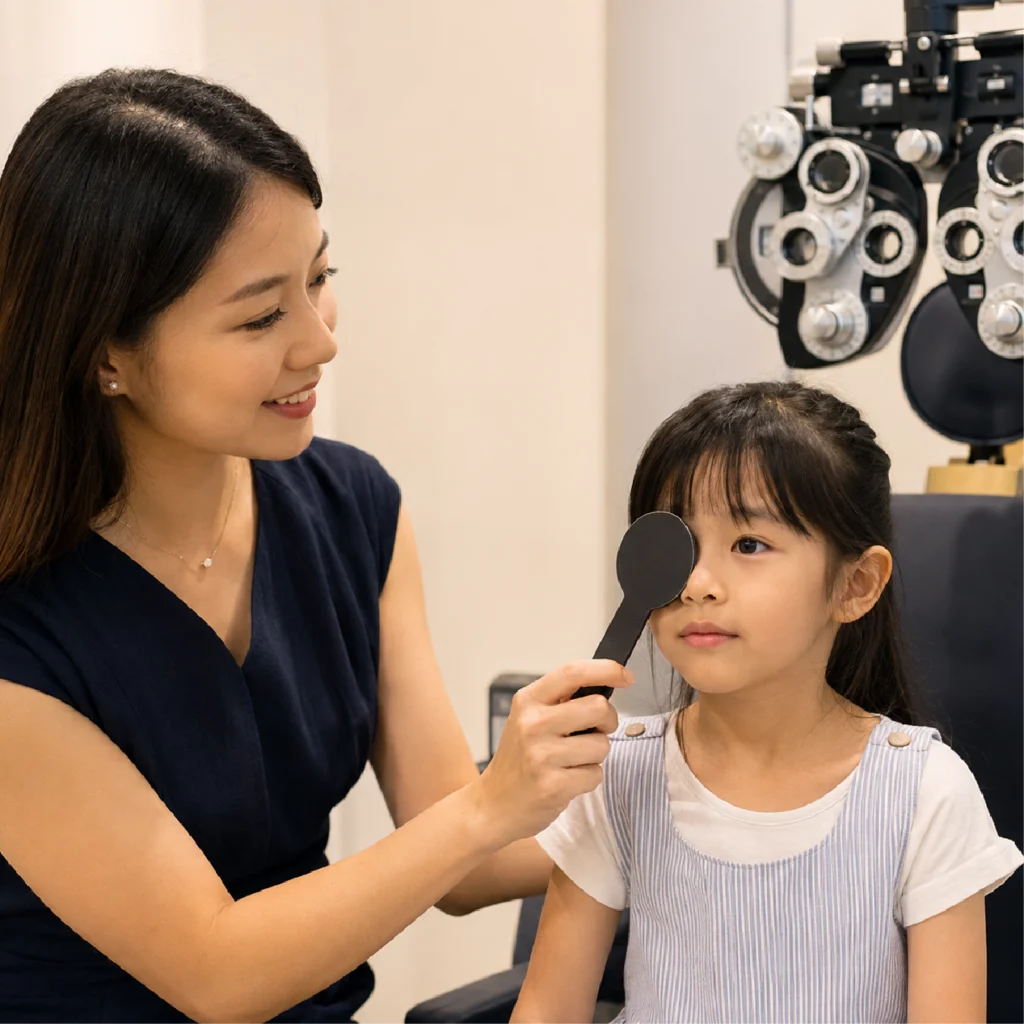
Myopia, or short-sightedness, is becoming increasingly common among children worldwide. It often develops at a younger age and may continue to progress as children grow. Without proper monitoring and management, prescriptions can increase, raising the risk of serious eye conditions later in life.
Modern myopia monitoring goes beyond measuring glasses prescription. It also includes measuring axial length, which tracks the eye’s physical growth. This helps optometrists better understand progression and recommend timely, personalized myopia control strategies.
With regular monitoring and early intervention, parents can help slow myopia progression and protect their child’s long-term vision and eye health.
Lorem ipsum dolor sit amet, consectetur adipiscing elit. Ut elit tellus, luctus nec ullamcorper mattis, pulvinar dapibus leo.
Lorem ipsum dolor sit amet, consectetur adipiscing elit. Ut elit tellus, luctus nec ullamcorper mattis, pulvinar dapibus leo.
Lorem ipsum dolor sit amet, consectetur adipiscing elit. Ut elit tellus, luctus nec ullamcorper mattis, pulvinar dapibus leo.
High myopia is more than needing stronger glasses. Excessive elongation of the eye can stretch and weaken structures such as the retina, increasing the risk of serious eye conditions later in life.
Children with high myopia have a greater lifetime risk of retinal detachment, which can cause sudden vision loss if not treated promptly. They are also more likely to develop glaucoma, which can damage the optic nerve without early symptoms, and cataracts at a younger age.
A major long-term concern is myopic macular degeneration (MMD), which affects the central retina and can cause permanent loss of detailed vision, making activities such as reading, driving, and recognizing faces more difficult.
Early detection, regular monitoring, and effective myopia management are important for protecting long-term eye health.
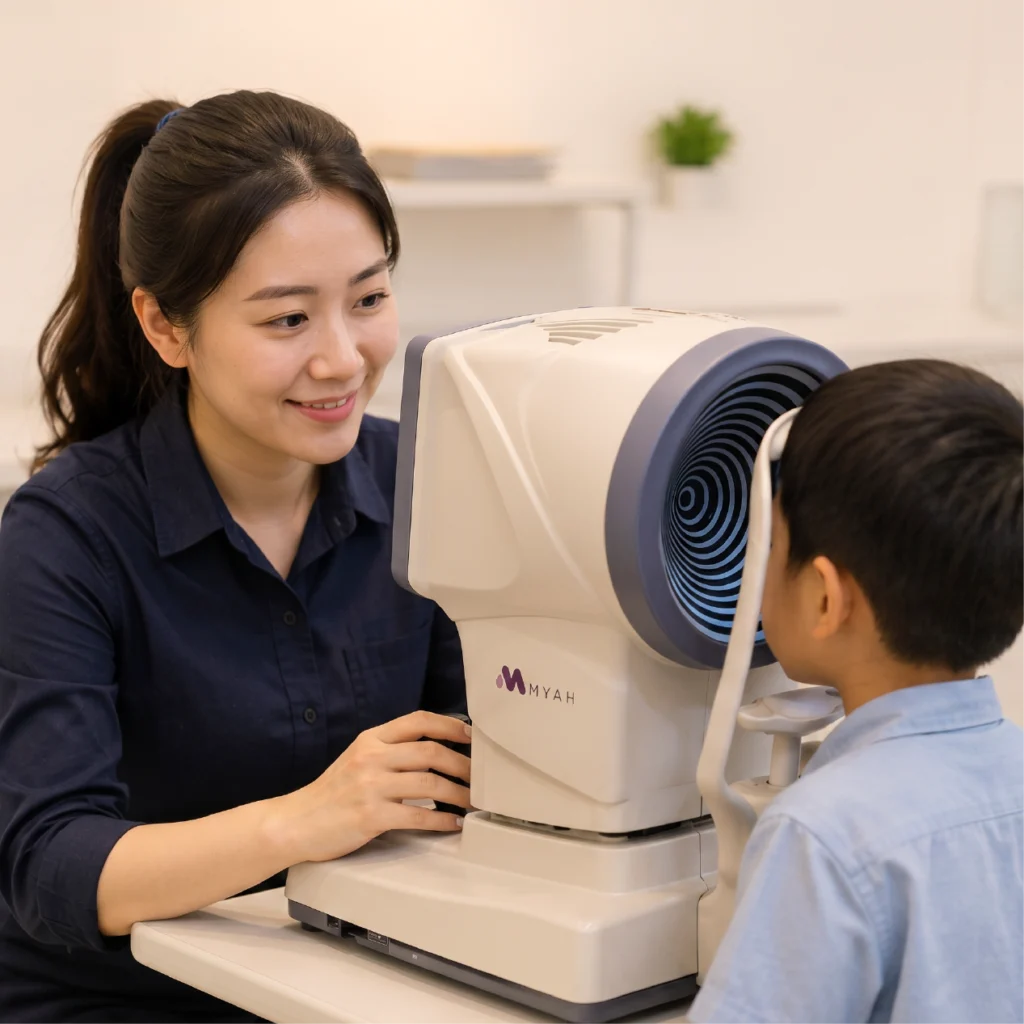
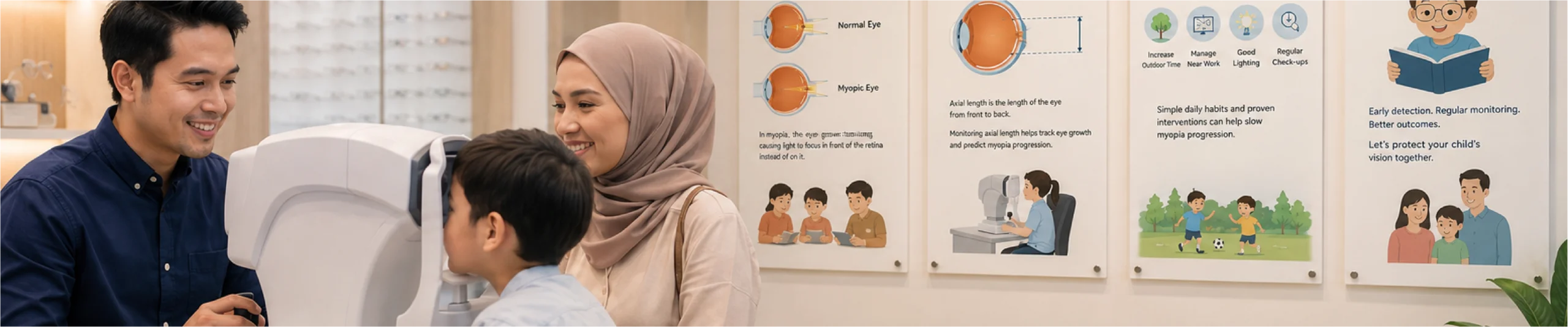
Our Myopia Monitoring Program, launched in 2023, is designed to give parents peace of mind while caring for their child’s eyesight. The program not only checks a child’s eye power but also measures axial length (the new gold standard for tracking eye growth) and reviews lifestyle habits such as time spent indoors and outdoors. This helps us build a clear picture of your child’s eye health and create simple, personalized steps to slow down myopia.
Since its launch, the program has already helped many children and families take control of short-sightedness, protecting vision and giving parents the confidence that they are doing the best for their child’s future.
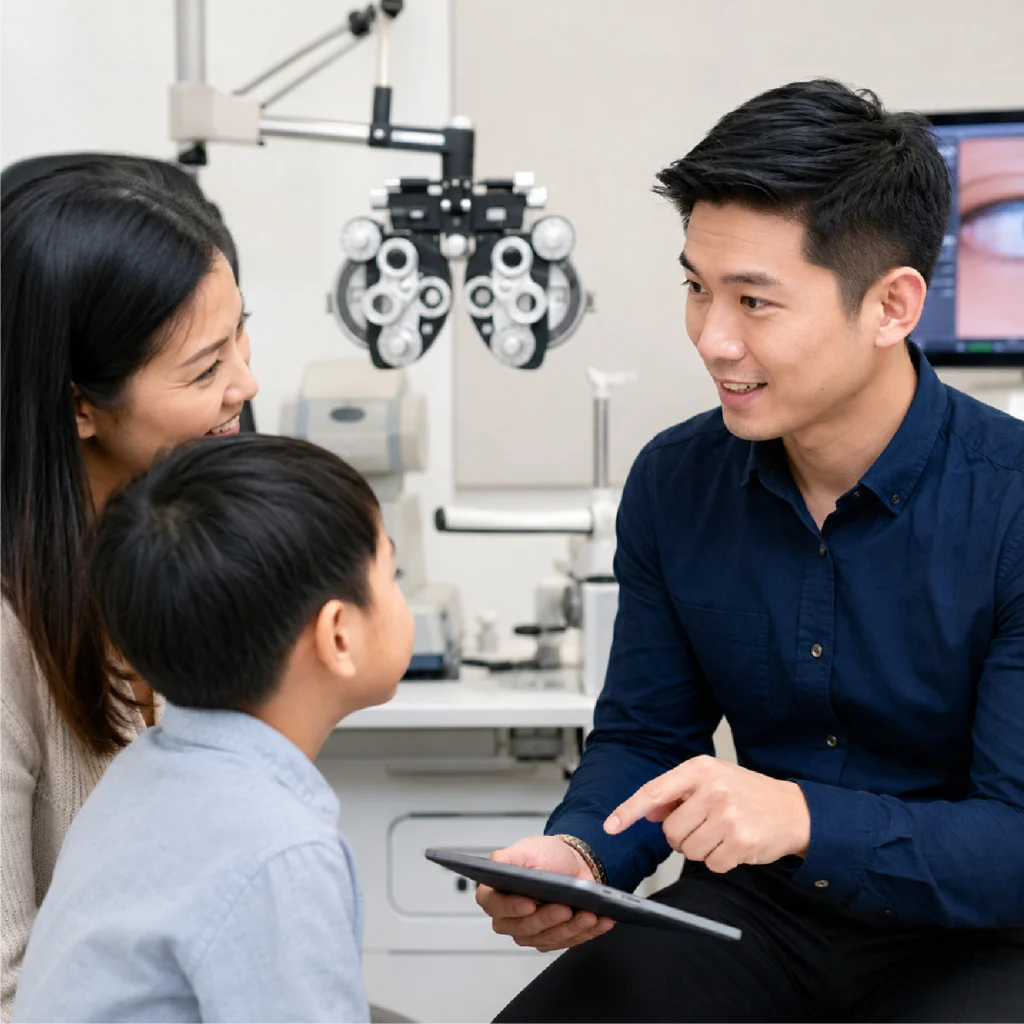
Regular monitoring is key to controlling myopia progression. Children should have comprehensive eye exams at least once a year, and in higher-risk cases, every 3-6 months. Frequent assessments allow us to detect changes early, adjust treatment plans, and protect your child’s long-term vision.
Don’t let myopia limit your child’s future. Join our Myopia Monitoring Program today for a proactive approach to track, manage, and slow down myopia progression. Book your child’s eye exam now and take the first step towards safeguarding their vision for life.