
You read the bottom line of the eye chart without a single squint. Your vision feels sharp, your glasses prescription hasn’t changed, and nothing hurts. Surely that means your eyes are healthy?
For people living with diabetes, not necessarily.
Diabetic retinopathy is one of the leading causes of preventable vision loss in working-age adults, and it’s often called a “silent” condition for good reason. In its early stages, it can develop without pain, without redness, and without any change in how clearly you see. By the time symptoms finally appear, such as blurred vision, dark spots, or floaters, the damage may already be well advanced.
At the back of your eye sits the retina, a thin layer of light-sensitive tissue that works like the sensor inside a camera. It depends on a network of tiny, delicate blood vessels to stay healthy. Over time, high blood sugar can damage these vessels, causing them to weaken, leak fluid or blood, or become blocked. Fluid leakage may cause swelling in the macula, the part of the retina responsible for detailed central vision.
In more advanced stages, abnormal new blood vessels may develop. These fragile vessels can bleed, and the scar tissue that forms may pull on the retina, potentially leading to retinal detachment. This process can happen gradually and quietly, over months and years.
An eye chart measures your visual acuity, or how clearly you can identify letters at a set distance. It does not examine the health of your retina, and it cannot determine your full glasses prescription on its own.
Early diabetic retinal changes can develop without noticeably affecting your central vision. That means you can get a perfectly normal eye chart result while changes are already happening at the back of your eyes. That’s why seeing clearly and having a healthy retina are not always the same thing.
Anyone with diabetes, whether type 1 or type 2, is at risk of diabetic eye disease. The risk increases the longer you’ve had diabetes, and is higher when blood sugar, blood pressure, or cholesterol are not well controlled. Some people with type 2 diabetes may already have retinal changes when they are first diagnosed, as elevated blood glucose levels can go unnoticed for some time.
Diabetes can also increase the risk of other eye conditions, including cataracts and glaucoma, which is another reason regular comprehensive eye examinations matter.
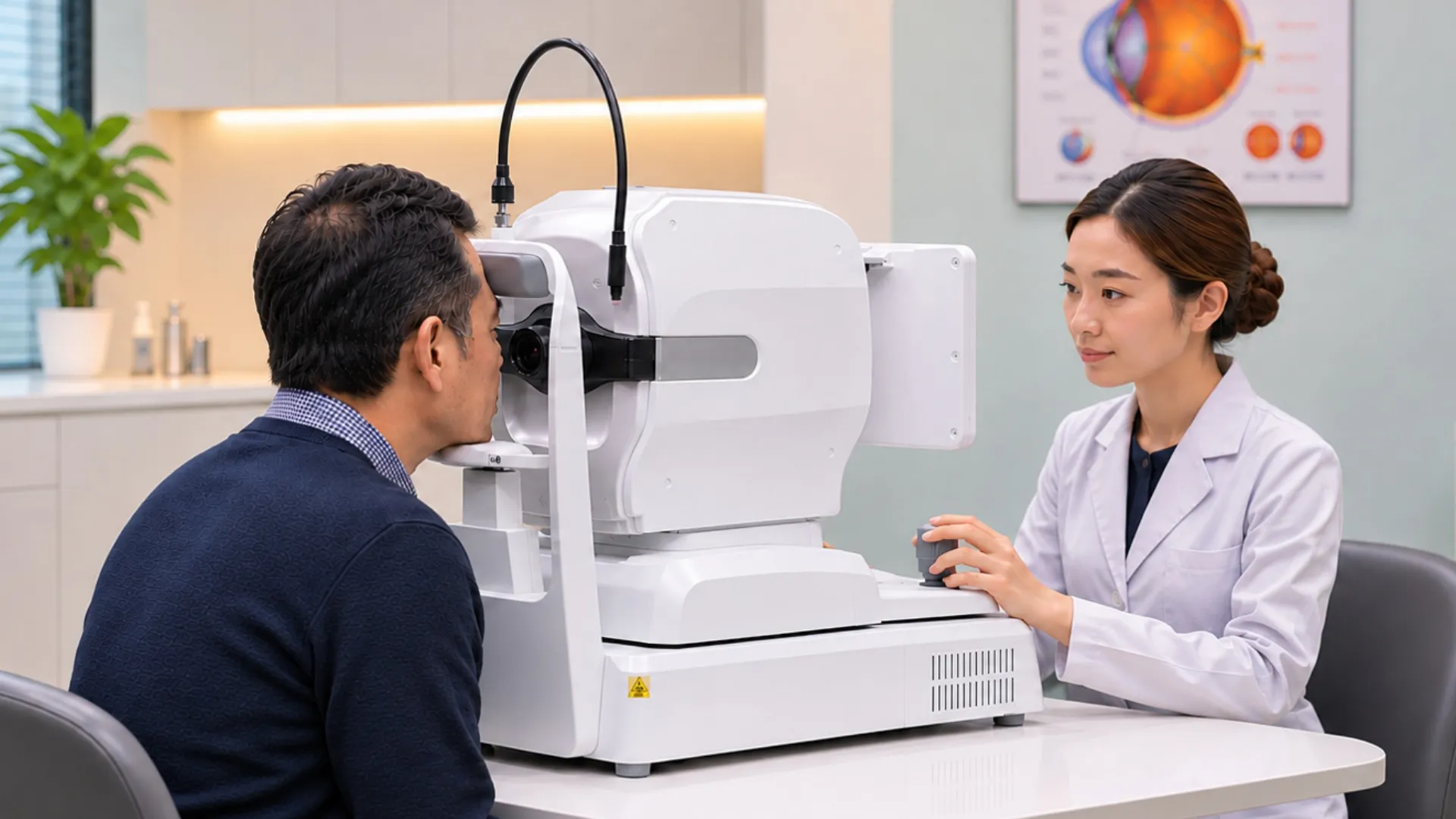
A comprehensive eye examination goes beyond checking whether you need glasses. It also looks at your eye health, including your retina and its blood vessels. Our optometrist will dilate your eyes and use specialised diagnostic equipment to examine the back of your eyes, looking for signs such as tiny bleeds, blood vessel changes, and other findings that may need further investigation.
Our Advanced Eye Examination also includes Optical Coherence Tomography (OCT), a non-invasive scan that creates detailed cross-sectional images of your retinal layers. OCT can help identify retinal swelling and structural changes, particularly when diabetic macular oedema is suspected.
Depending on your findings, further assessment may be recommended, such as a referral to an ophthalmologist. Also, as dilating drops are used, your vision may be blurry and sensitive to light for a few hours afterwards, so it’s best to plan your day accordingly.
Here’s the encouraging part. When diabetic eye changes are found early, there is a lot that can be done. Good control of blood sugar, blood pressure, and cholesterol can help slow progression, and catching changes sooner gives you more options to protect your sight.
Regular diabetic retinal examinations are important, even when your vision feels normal. Many people with diabetes need annual examinations, although the right frequency depends on your retinal findings, blood sugar control, and individual risk factors. Your eye care professional can advise on a schedule that suits you.

Seeing clearly is wonderful, but it isn’t proof that your retina is healthy. For people with diabetes, regular retinal examinations are an important part of protecting long-term vision, even before symptoms appear.
At Eye & Glasses Optometrist, our Advanced Eye Examination goes beyond checking your glasses power to help us better understand your vision and eye health.
Don’t wait for blurry vision to be your first warning. Book your Advanced Eye Examination with us today. Because healthy eyes deserve more than a good eye chart score.