
Eye Care Article

Why Do You Need Blue Light Lenses?

You might have heard of blue light or blue control lenses, but what exactly blue light is?

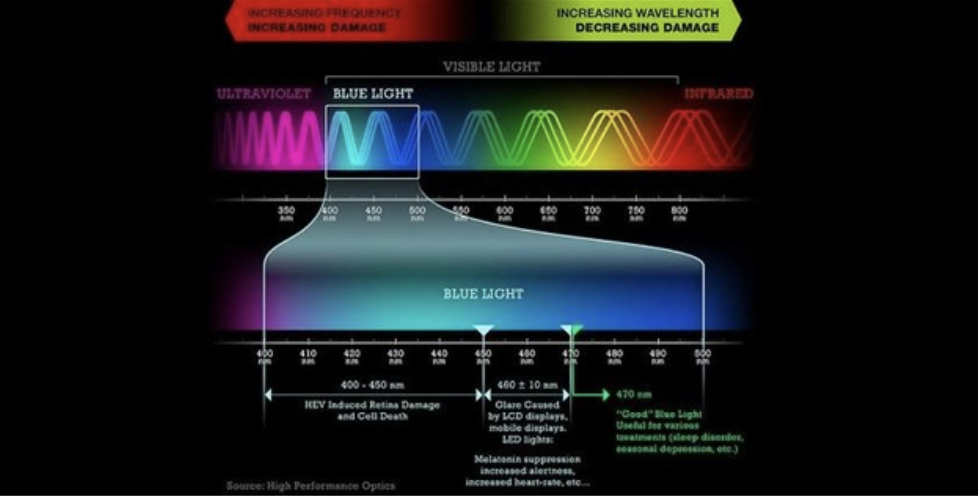
Light is made up of electromagnetic particles that travel in waves. When an object emits light, different colors vibrate at different wavelengths. These waves emit energy; the shorter the wavelength, the higher the energy they emit.

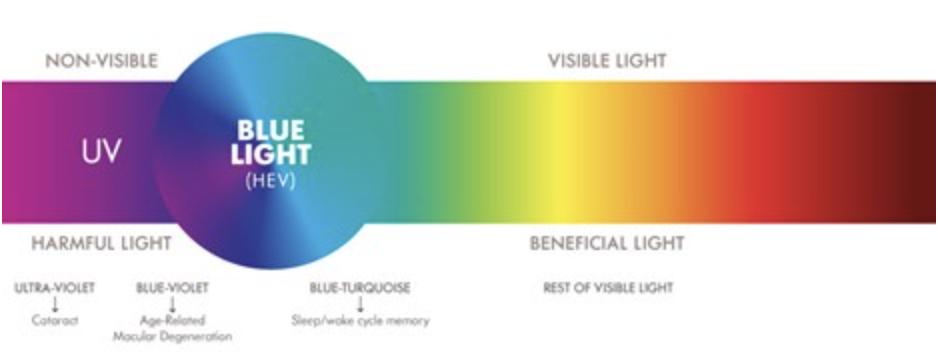
The human eye is sensitive to one part of this spectrum, which is called visible light. Visible light is the electromagnetic spectrum that can be seen as color, e.g., violet, indigo, blue, green, yellow, orange and red. Blue light (or blue-violet light) has a wavelength of approximately 380nm to 500nm making it one of the high-energy visible (HEV) lights. Hence, several studies suggest that the exposure to the blue end of the light spectrum might cause serious long-term damage to your eyes.

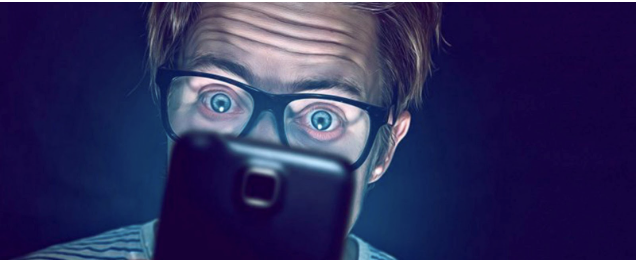
Sunlight is the main source of blue light and being outdoors during the day is when we are most exposed to it. However, there are also artificial indoor sources of blue light, including the fluorescent and LED globes as well as flat-screen televisions. Most notably, HEV blue light is emitted from the display screens of visual display units (VDUs) such as computers, tablets, smartphones, etc. Naturally, the artificial blue light is much weaker than the sun’s blue light, but nowadays people spend so much of their time indoors in front of VDUs that the exposure to blue light starts to add up.
Where does HEV blue light come from?

Are blue lights harmful?

Excessive exposure to blue light can damage the light-sensitive cells in the retina, potentially causing daytime fatigue and sleepless nights. This condition causes the changes that resemble those of macular degeneration, which may lead to permanent vision loss.

But not all blue light is bad!

In fact, healthy blue light is important for regulating the body’s natural sleep-wake cycle as the exposure to it during the day helps maintain healthy rhythms. On the contrary, too much blue light late at night can disrupt this rhythm, causing difficulty in falling asleep.


Balancing in a Digitally Connected World

By staying aware of our relationship to extensive digital usage, we can make smart choices to keep it at a healthy level. Using blue control lenses to filter or reduce blue light absorption is helpful in suppressing the secretion of melatonin, a hormone that regulates the sleep-wake cycle.

“What else can I do?”

Surely, it is recommended to always set a limit on your screen time to reduce any symptoms of digital eye strain. On the other hand, the screen brightness should be set slightly brighter than the surrounding lighting, as this is to ensure better comfort.

Practising visual hygiene, namely the 20-20-20 rule, is greatly advisable for heavy digital users! For every 20 minutes of screen time or near work, you should look at something 20 feet away for 20 seconds to relieve eye strain. Of course, to make sure that your eyes are in their best condition, having regular eye examinations is vital in ensuring better productivity. Feel free to look for us to keep track of your eye health!

Need advice about your eyes or vision?
Contact our team for professional eye care support and personalized recommendations.