Eye Care Article

What is Lazy Eye and How Can We Treat It?

Lazy eye, medically known as amblyopia, is a common vision problem that usually develops at birth or during early childhood. It occurs when one eye is significantly weaker than the other, often caused by squint (strabismus) or a large difference in refractive errors between the two eyes. If left untreated, the brain may start ignoring signals from the weaker eye, leading to permanent vision problems and reduced depth perception. 

Amblyopia will not improve on its own. Untreated lazy eye can lead to permanent vision loss in the weaker eye. However, if detected and treated before the age of 8, many children can achieve 6/6 vision in the affected eye, restoring normal visual function. Early detection and treatment are crucial to give your child the best chance of developing normal vision.

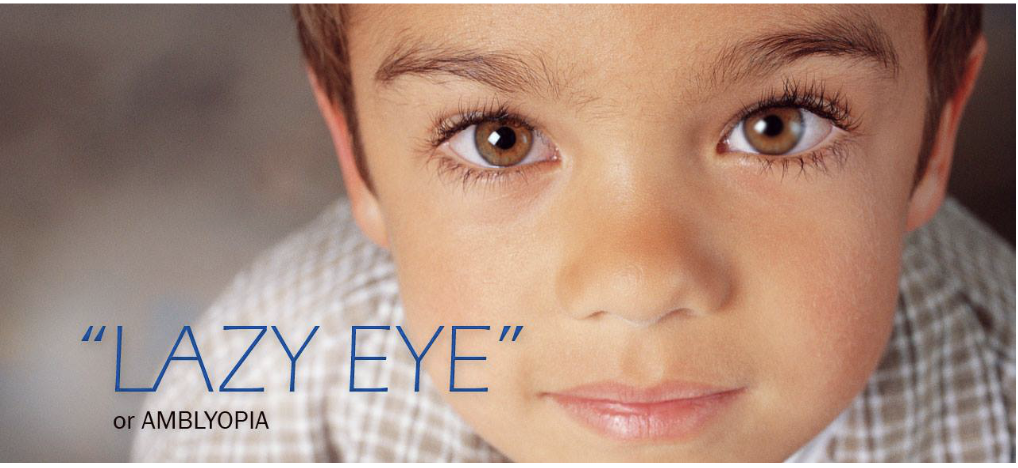
How is Amblyopia Treated?

Amblyopia can be treated through several methods, depending on the cause and severity:

  1. Vision Therapy
    Vision therapy trains both eyes to work together as a team. It encourages the brain to use the weaker eye, gradually restoring vision.
  2. Patching
    A patch is placed over the stronger eye to force the weaker eye to work harder. Depending on the child’s needs, patching may be required for a few hours each day or even full-time for several weeks or months.
  3. Atropine Eye Drops
    For children who resist patching, atropine eye drops can be used in the stronger eye to blur its vision, encouraging use of the weaker eye.
  4. Corrective Lenses
    If amblyopia results from uncorrected refractive errors, full-time glasses or contact lenses can often correct the problem. In some cases, patching may be combined with corrective lenses for better results.
  5. Surgery
    When amblyopia is caused by a large eye turn (strabismus), surgery may be required to straighten the eyes. This corrects the eye muscle imbalance, allowing both eyes to focus together properly.
Need advice about your eyes or vision?
Contact our team for professional eye care support and personalized recommendations.