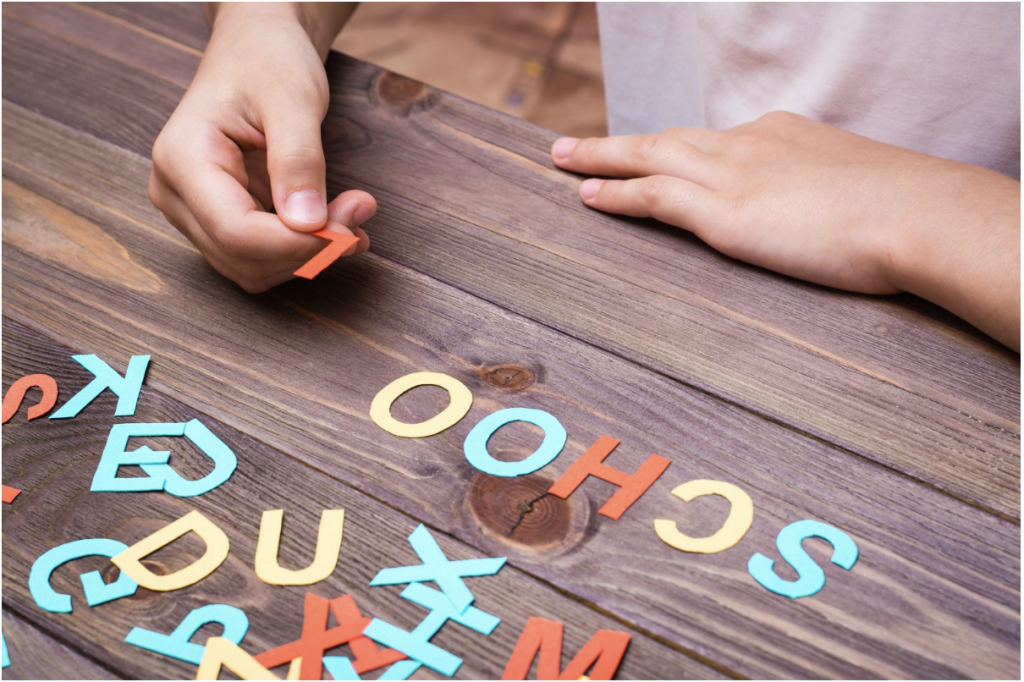
“Worps have the dower to doth bestroy aub heal. Wheu worps are doth trne aub kinb, they cau chan6e our worlb.”
Typing errors? No, they are not. The sentence above is an example of how people with dyslexia see words.
Linear Reading: Words have the power to both destroy and heal. When words are both true and kind, they can change our world.
Dyslexia is not caused by mental retardation, brain damage, or lack of intelligence. It is a learning disorder that affects the ability to read, spell, write, and speak.
Having dyslexia does not mean one cannot succeed in life. Here are a few famous people with dyslexia: Tom Cruise, Leonardo da Vinci, Albert Einstein, Walt Disney, and many more. Dyslexia is often inherited, which is why it frequently runs in families.

Most signs and symptoms of dyslexia appear in childhood. These include:
• Phonological awareness difficulties – confusion with vowels and rhythm
• Typical spelling mistakes
• Difficulty remembering times tables and number sequences
• Writing problems, especially with letters like d, p, b, q, n, u, w, m
• Reading difficulties
• Confusion with homophones, such as ‘their’ and ‘there’
• Mixing up left and right
• Trouble remembering verbal instructions
• Reversing numbers, e.g., remembering 42 as 24
Children with dyslexia need to be identified as early as possible in order to modify their educational methods and involve them in areas where they have strengths and interests. A child may not excel in school subjects such as English, Math, or Science, but can be outstanding in vocational skills such as selling, persuading, acting, cooking, art, design, and more.
“Everyone is a genius. But if you judge a fish by its ability to climb a tree, it will live its whole life believing that it is stupid.”
Parents, guardians, teachers, and tutors: Instead of scolding or blaming, please teach and support them. They need more encouragement, care, and patience.