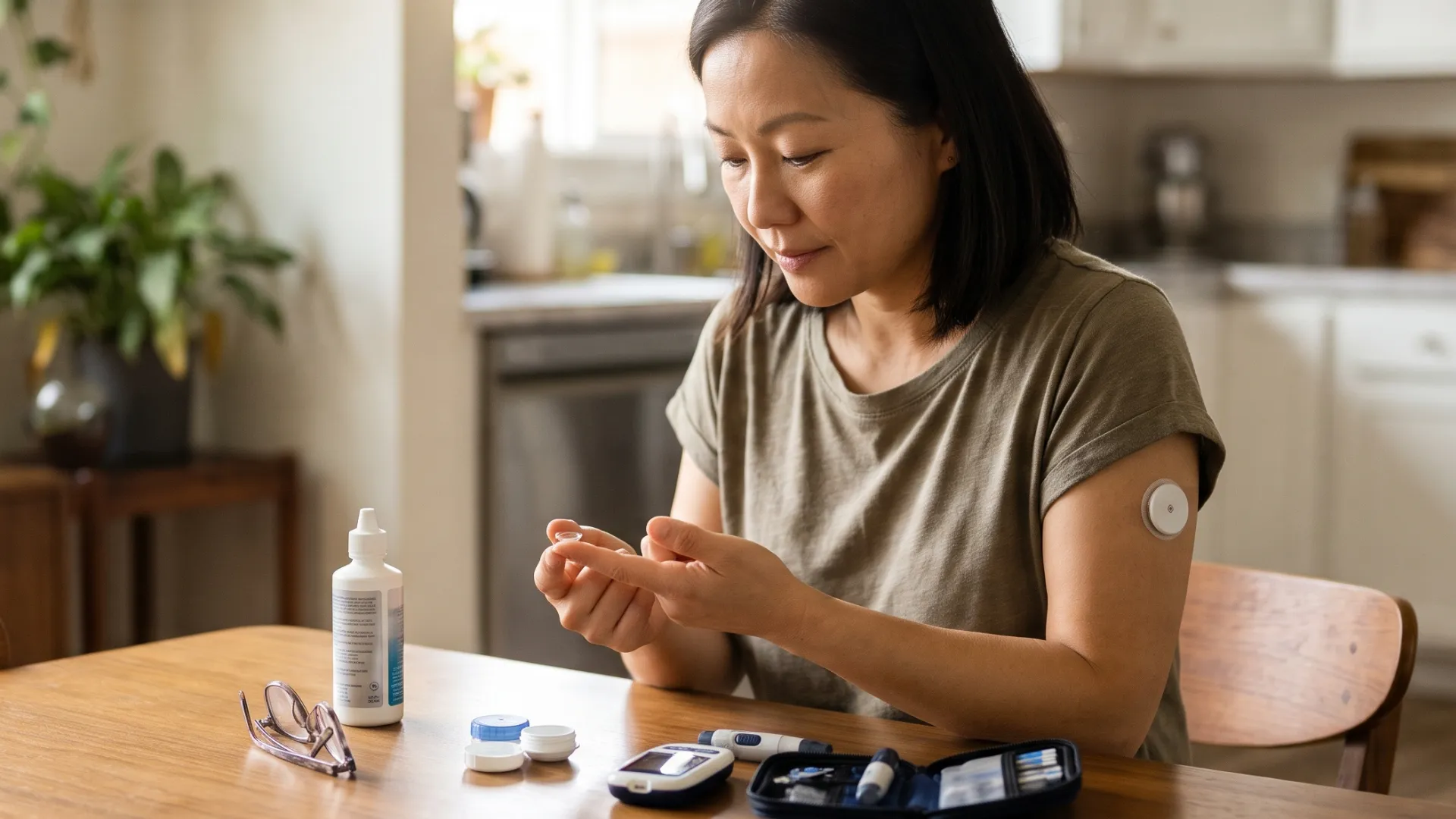
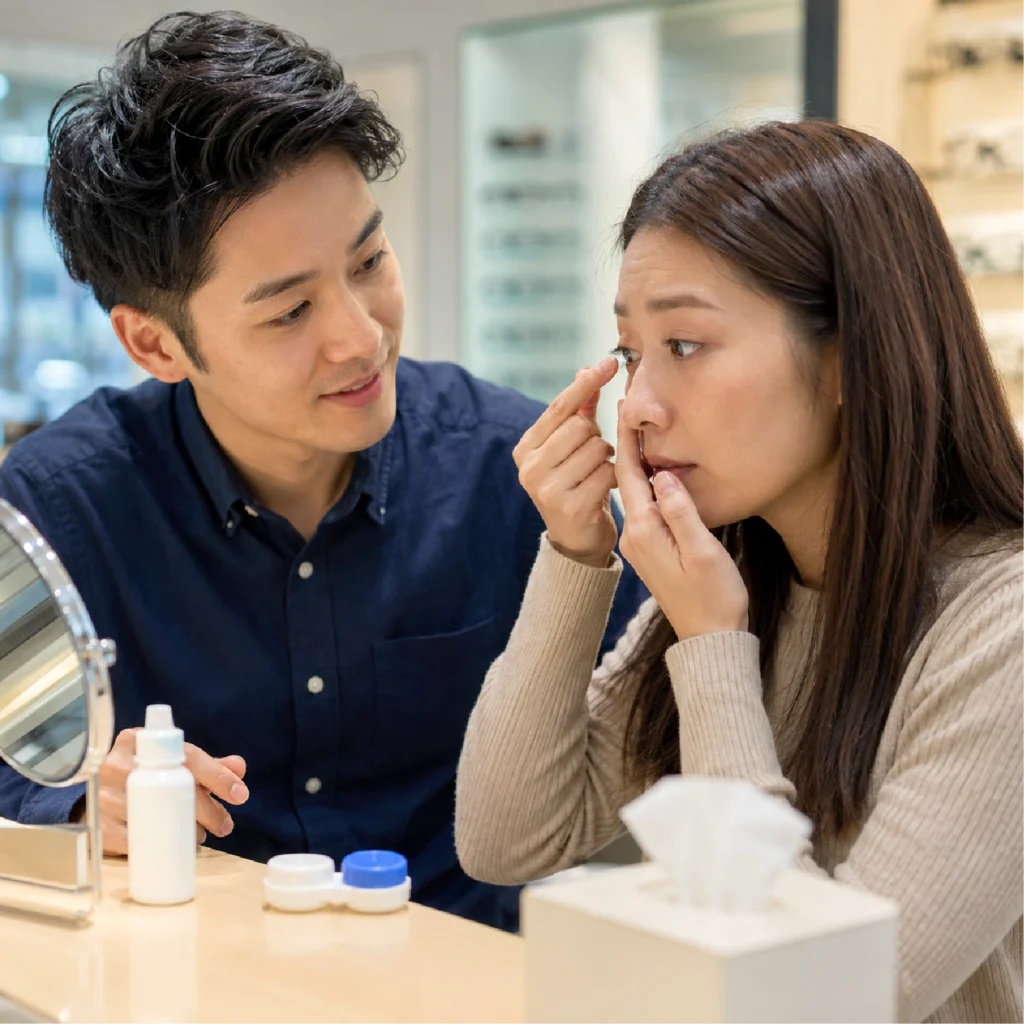
Diabetes doesn’t mean giving up contact lenses, but your eye health matters.
Good news! Having diabetes doesn’t automatically mean you can’t wear contact lenses. Many people with diabetes can still enjoy wearing them safely and comfortably, provided their eyes are healthy, their lenses fit properly and their diabetes is appropriately managed.
However, diabetes can affect your eyes in ways you might not notice. From dryness to slower healing, these changes can make contact lens wear a little more challenging. So, what should you know before putting on your contact lenses?
How Can Diabetes Affect Contact Lens Wear?
1. Your Eyes May Become Drier
Ever noticed your contact lenses becoming uncomfortable after a few hours? Diabetes can affect tear production and tear film stability, making your eyes more prone to dryness. Since contact lenses rest on your tear film, dry eyes can lead to irritation, discomfort or occasional blurry vision, especially after prolonged wear.
2. Your Eyes May Become Less Sensitive
Your cornea is the clear surface at the front of your eye where contact lenses sit. Over time, diabetes can affect the nerves in your cornea, making it less sensitive to pain or irritation.
Why does this matter? You might not notice a small scratch or early eye problem as quickly as you normally would. That’s why unusual redness, watering, light sensitivity or blurred vision shouldn’t be ignored, even if your eyes don’t hurt.
3. Small Scratches May Take Longer to Heal
Sometimes, contact lenses can cause minor scratches or irritation to the cornea. Normally, these heal fairly quickly. However, diabetes can slow down the healing process, especially when blood sugar levels are poorly controlled. This means even a small injury may need extra attention to prevent further complications.
4. Eye Infections May Become a Greater Concern
Contact lenses already carry a risk of eye infections, particularly when they aren’t cleaned or handled properly. Poorly controlled diabetes may increase your susceptibility to infections and slow down healing, making proper contact lens hygiene especially important.
Does this mean contact lenses are unsafe? Not necessarily! Good hygiene and regular contact lens assessments can help reduce these risks.