
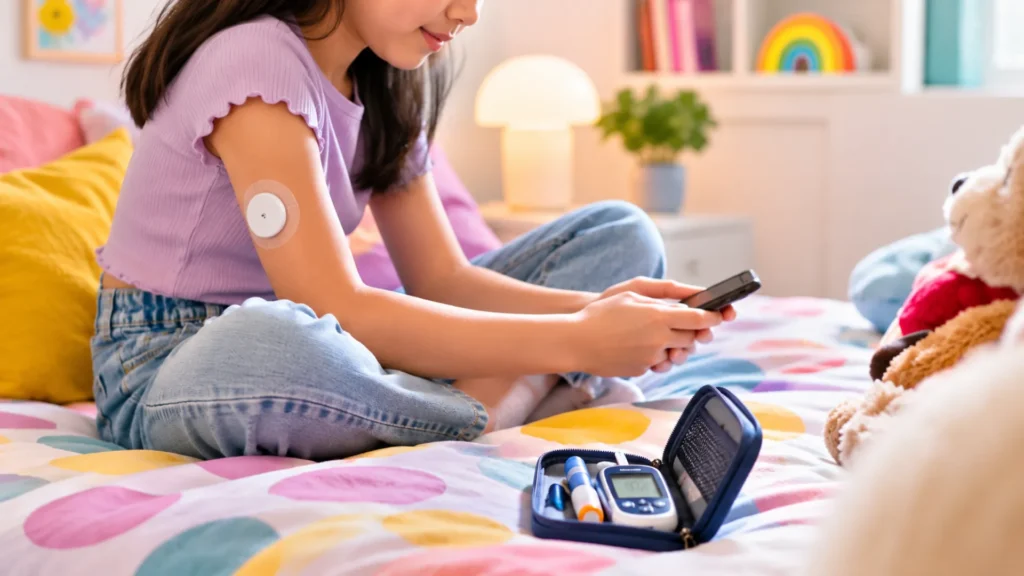
Imagine a child has been living with diabetes for a few years. They attend regular medical appointments, their eyesight seems perfectly fine, and they have never complained about seeing things differently.
So, would you assume their eyes are healthy? Not necessarily.
Diabetic retinopathy can develop silently, sometimes without affecting eyesight in its early stages. Although it is uncommon in younger children, those living with diabetes can develop changes in the tiny blood vessels at the back of their eyes, particularly as they grow older and the duration of diabetes increases. This is why regular diabetic eye screening matters, even when your child seems to see perfectly well.
Now, let’s take a closer look at HOW diabetes affects children’s eyes, WHAT parents should know about diabetic retinopathy, and WHEN screening should begin.
Diabetic retinopathy is an eye condition caused by damage to the tiny blood vessels in the retina, the light-sensitive tissue at the back of the eye that allows us to see. When blood glucose levels remain high over time, these delicate blood vessels can become damaged. They may leak fluid or blood, become blocked or develop abnormal new blood vessels.
As the condition progresses, it can affect vision and in severe cases, lead to permanent vision loss. The concerning part is that early diabetic retinopathy often has no noticeable symptoms. A child may still see clearly even when changes are already developing at the back of the eye.
Yes! Children and teenagers with both Type 1 (T1DM) and Type 2 diabetes (T2DM) can develop diabetic retinopathy. However, the risk and timing can differ.
Children with Type 1 Diabetes (T1DM)
Diabetic retinopathy is generally uncommon during the early years after diagnosis. The risk increases as children go through puberty and as the duration of diabetes increases.
Children with Type 2 Diabetes (T2DM)
Some children may have had elevated blood glucose levels for an extended period before receiving a diagnosis. As a result, diabetes-related eye complications may already be present when the condition is identified. This is why eye screening is recommended from the time of diagnosis for children with T2DM.
The recommended screening schedule depends on the type of diabetes. According to Malaysian Ministry of Health (MOH) guidance:
An important reminder for parents!
A routine eye examination to check whether a child needs spectacles is not the same as diabetic retinopathy screening. Diabetic eye screening specifically assesses retinal health and may involve a dilated retinal examination or retinal photography. Having clear vision or not needing spectacles DOES NOT necessarily mean that the retina is healthy!
Diabetic retinopathy may not cause noticeable symptoms in its early stages. However, as the condition progresses, some children may experience blurred or fluctuating vision, difficulty seeing fine details, and dark spots or floaters.
It is also essential to know that fluctuating blood glucose levels can temporarily affect the eye’s ability to focus, causing blurred vision. This does not necessarily mean diabetic retinopathy is present. However, never dismiss changes in children’s eyesight! Sudden vision loss, a sudden increase in floaters, flashes of light or a dark shadow across the vision require urgent eye assessment.
Do not wait for symptoms before arranging an eye examination.
Managing diabetes involves more than monitoring blood glucose levels. Here are five practical ways parents can help protect their child’s long-term eye health.
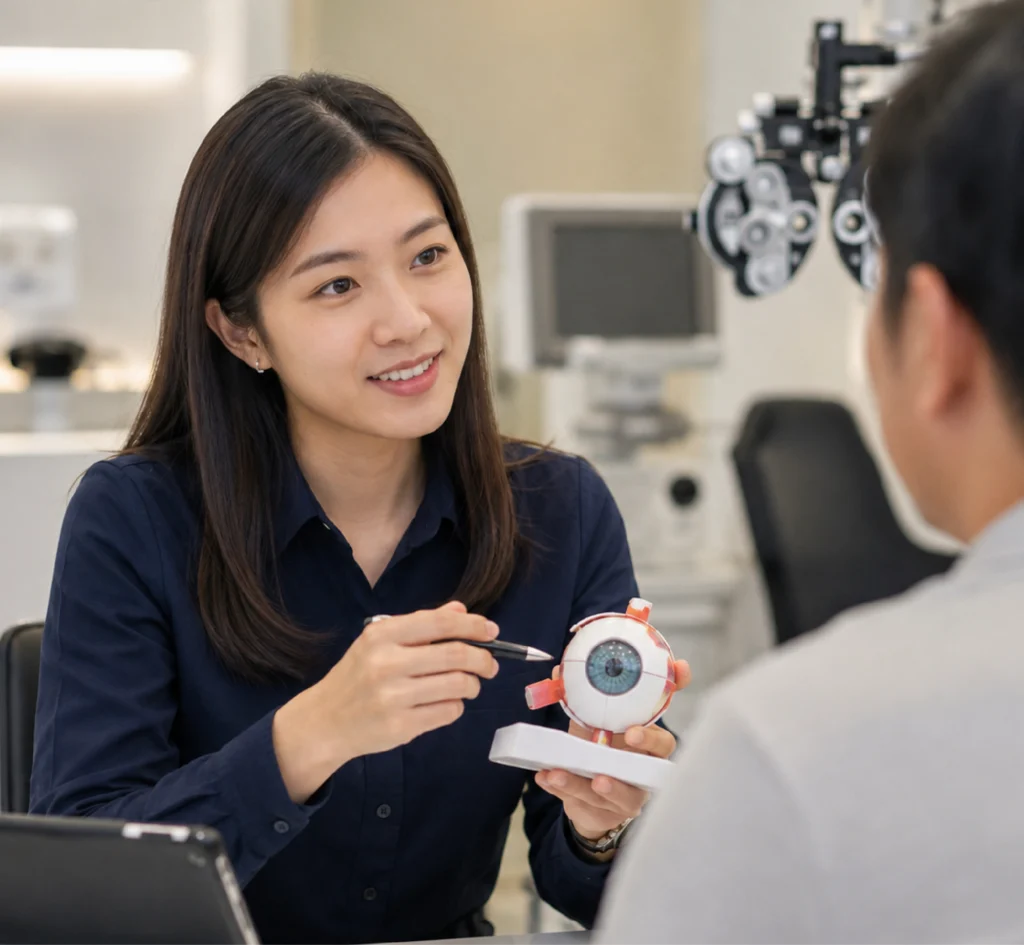
A diabetes diagnosis can feel overwhelming for any parent, especially when it involves a young child. Fortunately, diabetic retinopathy is not inevitable. With good blood glucose management, regular medical follow-ups and timely eye screening, the risk of serious vision complications can be reduced.
Remember, children may still see clearly even when early retinal changes are developing. That is why eye screening should never depend on whether children complain about their vision.
At Eye & Glasses Optometrist, our optometrists can assess children’s vision and eye health, and help determine whether further retinal assessment or specialist referral is needed. If your child has diabetes, speak with the respective diabetes care team and our optometrists about the appropriate timing for an eye examination.
Protecting children’s vision starts long before they notice anything is wrong.